How Gratitude Improves Mental Health
In a world where stress, anxiety, and self-doubt have become everyday companions, the simple practice of gratitude is often overlooked. We chase big achievements, compare ourselves with others, and get lost in what we lack. But gratitude shifts the spotlight. Instead of focusing on what’s missing, it gently reminds us of what we already have. It grounds us, connects us, and heals us in ways we don’t always notice immediately.
Gratitude is not just a feel-good emotion—scientists, psychologists, and mental health experts consistently confirm its powerful effect on the brain and overall well-being. When practiced regularly, gratitude can rewire our mindset, strengthen relationships, reduce negative thinking, and improve emotional resilience.
This article explores how gratitude improves mental health, why it works, and how anyone can start practicing it in daily life.
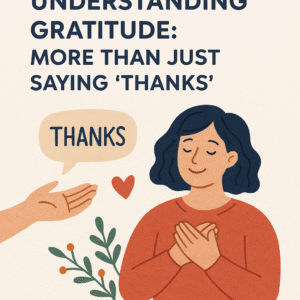
1. Understanding Gratitude: More Than Just Saying “Thanks”
Gratitude is often misunderstood as simple politeness or a quick “thank you.”
But true gratitude is much deeper.
Gratitude is the ability to recognize the value in life—both big and small.
It is the conscious awareness of blessings, kindness, opportunities, and even struggles that helped shape you.
It teaches you to:
-
Notice the good in your life
-
Appreciate people instead of taking them for granted
-
Celebrate what you have instead of worrying about what you don’t
-
Feel contentment rather than constant dissatisfaction
When gratitude becomes a habit, your mind naturally shifts away from negativity, fear, and scarcity. It helps anchor your emotions and offers stability even during difficult times.
2. The Science Behind Gratitude and Mental Health
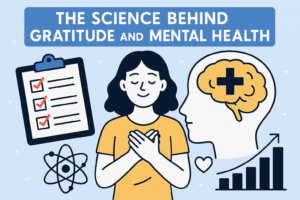
Researchers have studied gratitude for decades, and the results are remarkable.
Gratitude activates key parts of the brain related to:
-
Positive emotion
-
Reward and motivation
-
Stress reduction
-
Emotional bonding
Here’s how gratitude physically improves your mental health:
a. Gratitude Releases “Feel-Good” Chemicals
When you express or experience gratitude, your brain releases:
-
Dopamine – the reward and motivation chemical
-
Serotonin – the mood-stabilizing chemical
-
Oxytocin – the bonding and trust chemical
These naturally lift your mood and create emotional balance.
b. Gratitude Lowers Stress and Anxiety
Gratitude reduces levels of cortisol, the stress hormone.
When cortisol decreases:
-
Anxiety lowers
-
Irritability reduces
-
Sleep improves
c. Gratitude Rewires the Brain
Regular gratitude practice strengthens neural pathways associated with positivity.
This means:
-
Your brain becomes more sensitive to joy
-
Negative thoughts lose power
-
Optimism increases naturally
Your mind literally trains itself to look for good things—even during challenges.
3. How Gratitude Enhances Emotional Well-being
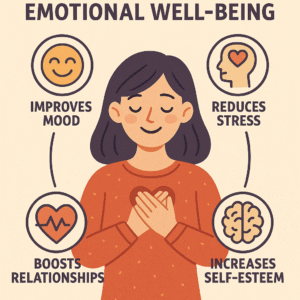
a. Reduces Negative Thinking
Gratitude shifts your attention from problems to possibilities.
When you focus on blessings, your brain has less room for:
-
Self-doubt
-
Regret
-
Anger
-
Jealousy
It acts as a filter that blocks harmful emotional patterns.
b. Builds Resilience
Grateful people cope with setbacks better.
Instead of viewing difficulties as the end, gratitude allows them to see:
-
Lessons
-
Growth
-
Strength
-
Support systems
This mindset makes you stronger during hardship.
c. Creates a Sense of Inner Peace
When you appreciate the present moment, you stop fighting with your past or fearing the future. Gratitude brings you back to now—calm, grounded, and steady.
4. How Gratitude Improves Self-Esteem and Confidence
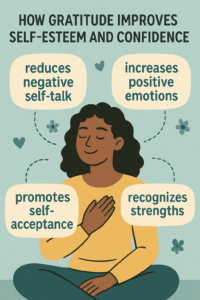
Gratitude makes you kinder to yourself.
When you acknowledge your progress, talents, victories, and personal growth, your self-worth increases naturally.
It also reduces social comparison.
Instead of feeling insecure about others’ success, gratitude helps you feel inspired and content with your journey.
This leads to:
-
Higher confidence
-
Lower jealousy
-
Healthier self-image
-
Stronger sense of identity
You start believing, “I have enough, I am enough, and I’m becoming better every day.”
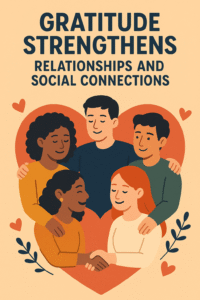
5. Gratitude Strengthens Relationships and Social Connections
Humans are emotional beings. We thrive on love, appreciation, and belonging.
Gratitude improves relationships by:
a. Deepening Bonds
Expressing gratitude makes people feel valued.
Simple appreciation strengthens intimacy, trust, and emotional closeness.
b. Reducing Conflicts
When you appreciate someone, you focus more on their good qualities and less on their flaws.
This reduces anger, misunderstanding, and unnecessary arguments.
c. Increasing Empathy
Gratitude opens your heart.
It helps you see things from the other person’s perspective—making you more patient, understanding, and compassionate.
Good relationships improve mental health immensely, and gratitude builds those relationships effortlessly.
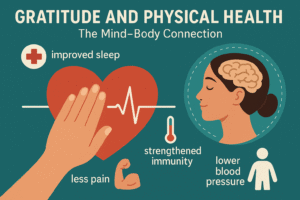
6. Gratitude and Physical Health: The Mind–Body Connection
Good mental health often leads to a healthy body.
Studies show that grateful people:
-
Sleep better
-
Experience less fatigue
-
Have lower blood pressure
-
Feel more energetic
-
Have stronger immune systems
Why?
Because a calm, positive mind reduces stress and tension inside the body.
A grateful heart supports a healthy body.
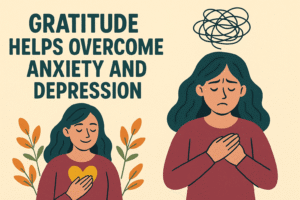
7. Gratitude Helps Overcome Anxiety and Depression
Gratitude is not a replacement for therapy or medical treatment, but it is a powerful supportive practice.
How it helps:
-
It interrupts cycles of worry
-
It increases hope
-
It builds emotional strength
-
It reduces the feeling of loneliness
-
It increases joy by focusing on meaningful moments
Many therapists use gratitude journaling as part of treatment for anxiety and depression because it gently shifts the mind from pain to perspective.
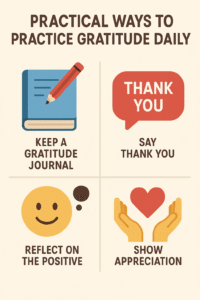
8. Practical Ways to Practice Gratitude Daily
Gratitude is powerful, but only if you practice it regularly.
Here are simple, practical ways to include gratitude in your daily routine:
1. Gratitude Journaling
Write 3–5 things you are grateful for every day.
They can be big or small:
-
A good meal
-
A comfortable bed
-
Supportive parents
-
Sunshine after rain
-
Completing a task
-
A friend’s message
This daily reflection rewires your thinking.
2. Morning Gratitude Ritual
Before getting out of bed, think of one thing you’re grateful for.
It sets a positive tone for the entire day.
3. Evening Reflection
Before you sleep, recall the best moment of your day.
Even on a bad day, there’s always at least one small positive—the taste of tea, a smile, or the fact that you’re alive and breathing.
4. Express Gratitude to People
Tell someone:
-
“Thank you for helping me.”
-
“I appreciate you.”
-
“You made my day better.”
Expression strengthens relationships and increases your happiness too.
5. Gratitude Letters or Messages
Write a heartfelt message to someone who influenced your life positively.
Even if you don’t send it, the act of writing boosts emotional well-being.
6. Create a Gratitude Jar
Write small notes of gratitude and drop them into a jar daily.
When you feel stressed or low, open the jar and read them.
7. Mindful Gratitude (Pause and Notice)
Throughout your day, pause and observe:
-
The sky
-
Nature
-
Your breath
-
Silence
-
A good conversation
Mindful gratitude brings peace and grounding instantly.
8. Practicing Gratitude During Difficult Times
Gratitude does not mean ignoring pain.
It means finding strength and meaning even in hardship.
Ask:
-
What is this situation teaching me?
-
Who is supporting me?
-
What inner strength is helping me survive?
This helps convert pain into purpose.
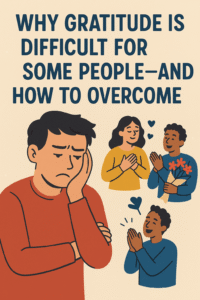
9. Why Gratitude is Difficult for Some People—And How to Overcome It
Some people struggle with gratitude because of:
-
Past trauma
-
Chronic stress
-
Negative thinking habits
-
Low self-esteem
-
Unresolved emotions
If this is you, remember: Gratitude is a skill, not a personality trait.
You don’t need to feel thankful all the time.
Start small. One thought a day is enough.
Gratitude becomes easier with practice.
10. Long-Term Benefits of Gratitude on Mental Health
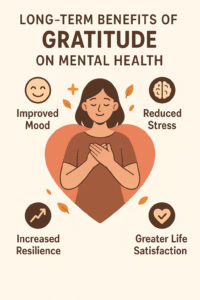
When gratitude becomes a lifestyle, the benefits multiply:
✔ Increased happiness
You learn to savor moments and appreciate life deeply.
✔ Reduced emotional reactivity
You stop overthinking or reacting to minor issues.
✔ Emotional resilience
Difficulties feel less overwhelming.
✔ Stronger relationships
You develop meaningful, lasting connections.
✔ Inner calm and mindfulness
Your mind learns to slow down and enjoy the present.
✔ Positive self-image
You begin to see your strengths instead of your flaws.
✔ Purpose and meaning
Gratitude helps you recognize what truly matters.
11. Gratitude as a Daily Lifestyle, Not a One-Time Activity
To truly transform your mental health, gratitude should become part of your daily mindset.
It is not a quick fix, but a lifelong emotional practice.
Gratitude asks you not to wait for big achievements, but to value the little joys:
-
A peaceful morning
-
A warm meal
-
A supportive friend
-
A learning opportunity
-
A safe home
-
Your own progress
When you start noticing these small blessings, your entire perspective shifts.
You feel lighter, calmer, and more fulfilled.
12. Final Thoughts: Gratitude Can Change Your Life
Gratitude is one of the simplest yet most powerful tools for improving mental health.
It reminds you that even with challenges, life still holds beauty, hope, and meaning.
Practicing gratitude does not require money, time, or special skills.
All it needs is awareness.
When you choose gratitude every day:
-
Your mind becomes stronger
-
Your heart becomes softer
-
Your stress reduces
-
Your relationships flourish
-
Your confidence grows
-
Your life becomes brighter
Gratitude is not just a practice—
It is a way of living with peace, strength, and purpose.