How Portion Control Helps in Long-Term Weight Management
Weight management is often misunderstood as a short-term goal focused on rapid weight loss. Many people jump from one diet to another, cutting out entire food groups or following extreme calorie restrictions, only to regain the weight later. This cycle of losing and regaining weight—commonly known as “yo-yo dieting”—can be frustrating and unhealthy.
One of the most effective yet overlooked strategies for long-term weight management is portion control. Unlike restrictive diets, portion control does not tell you what to eat, but rather how much to eat. It encourages balance, awareness, and sustainability—key factors for maintaining a healthy weight over time.
This article explores how portion control works, why it is effective, and how it supports long-term weight management without compromising nutrition, enjoyment, or mental well-being.
Understanding Portion Control
Portion control refers to eating an appropriate amount of food that meets your body’s energy and nutritional needs without excess. It is different from dieting because it does not eliminate foods or enforce strict rules. Instead, it promotes mindful eating and awareness of serving sizes.
In today’s world, portion sizes have increased significantly. Restaurants serve oversized meals, packaged foods contain multiple servings, and mindless snacking has become common. As a result, many people consume far more calories than their bodies require—often without realizing it.
Portion control helps correct this imbalance by teaching you to recognize hunger cues, respect fullness signals, and consume food in quantities that support health rather than harm it.
The Connection Between Portion Size and Weight Gain
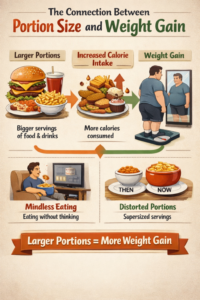
Weight gain occurs when calorie intake consistently exceeds calorie expenditure. While food quality matters, quantity plays a major role in energy balance.
Even healthy foods can contribute to weight gain if consumed in excessive portions. For example:
-
Eating large bowls of rice, even if it’s brown rice
-
Consuming handfuls of nuts without limits
-
Drinking large servings of fruit juice instead of whole fruit
When portion sizes are uncontrolled, calorie intake increases gradually. This slow, unnoticed increase is one of the main reasons people gain weight over time.
Portion control helps prevent this by keeping calorie intake aligned with the body’s actual needs.
Why Portion Control Is Effective for Long-Term Weight Management
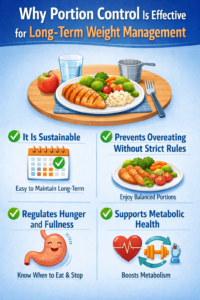
1. It Is Sustainable
One of the biggest reasons diets fail is because they are too restrictive. Eliminating favorite foods often leads to cravings, binge eating, and eventually quitting.
Portion control allows you to:
-
Eat all types of foods in moderation
-
Enjoy occasional treats without guilt
-
Avoid the feeling of deprivation
Because it fits into everyday life, portion control is easier to maintain for years rather than weeks.
2. It Prevents Overeating Without Strict Rules
Strict calorie counting can feel exhausting and stressful. Portion control simplifies the process by focusing on visual cues, plate balance, and mindful eating.
Instead of obsessing over numbers, you learn to:
-
Serve food in reasonable amounts
-
Eat slowly and stop when satisfied
-
Recognize true hunger versus emotional eating
This approach naturally reduces overeating while still allowing flexibility.
3. It Helps Regulate Hunger and Fullness
Eating large portions stretches the stomach over time, making you feel hungry even when your body has enough energy. Portion control helps retrain the stomach and brain connection.
With consistent portion control:
-
Hunger signals become more accurate
-
Fullness is felt earlier
-
Cravings decrease over time
This makes it easier to maintain weight without constantly feeling hungry.
4. It Supports Metabolic Health
Long-term overeating can lead to insulin resistance, hormonal imbalance, and slow metabolism. Portion control helps stabilize blood sugar levels and supports efficient digestion.
Balanced portions:
-
Prevent sudden blood sugar spikes
-
Reduce fat storage
-
Improve energy levels throughout the day
When metabolism functions well, weight management becomes easier and more natural.
Portion Control vs. Dieting: A Key Difference
| Dieting | Portion Control |
|---|---|
| Often temporary | Long-term lifestyle habit |
| Restrictive | Flexible and balanced |
| Can cause nutrient deficiencies | Supports complete nutrition |
| Leads to rebound weight gain | Helps maintain stable weight |
| Focuses on rules | Focuses on awareness |
Portion control is not about punishment—it is about understanding your body.
How Portion Control Improves Eating Habits
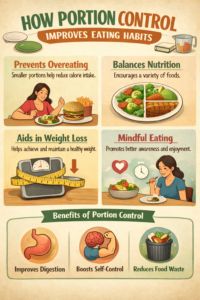
Encourages Mindful Eating
Portion control makes you more aware of:
-
What you eat
-
How much you eat
-
Why you eat
Instead of eating on autopilot, you start paying attention to flavors, textures, and satisfaction levels. This mindfulness reduces emotional and stress-related eating.
Improves Food Choices Naturally
When people practice portion control, they often begin choosing healthier foods naturally. Why? Because smaller portions of junk food do not satisfy hunger for long, while balanced meals do.
Over time, people tend to:
-
Increase vegetable and protein intake
-
Reduce excessive sugar and fried foods
-
Choose whole foods over processed ones
This shift supports long-term weight stability.

The Psychological Benefits of Portion Control
Weight management is not just physical—it is deeply psychological.
Reduces Food Guilt and Anxiety
Strict diets often label foods as “good” or “bad,” leading to guilt when rules are broken. Portion control removes this moral judgment around food.
You can:
-
Enjoy favorite foods occasionally
-
Eat without fear or shame
-
Build a healthier relationship with food
This positive mindset is crucial for long-term success.
Builds Self-Control and Confidence
Successfully managing portions builds trust in your ability to make healthy decisions. Over time, this confidence spills into other areas of life, such as exercise, stress management, and self-care.
Practical Ways Portion Control Helps Maintain Weight
Prevents Gradual Weight Gain
Many people gain weight slowly—1 to 2 kg per year—due to slightly larger portions over time. Portion control stops this gradual creep by keeping intake consistent.
Makes Weight Maintenance Easier After Weight Loss
After losing weight, maintaining it is often harder than losing it. Portion control helps:
-
Avoid returning to old eating habits
-
Maintain calorie balance
-
Adjust portions based on activity level
This makes long-term weight maintenance realistic.
Simple Portion Control Strategies for Everyday Life
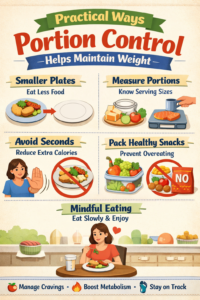
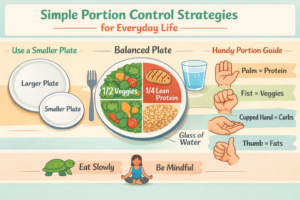
1. Use Smaller Plates and Bowls
Smaller plates make portions appear larger, which improves satisfaction without extra calories.
2. Fill Half Your Plate With Vegetables
Vegetables are low in calories and high in fiber. They add volume, nutrients, and fullness without weight gain.
3. Eat Slowly and Without Distractions
It takes about 20 minutes for the brain to recognize fullness. Eating slowly helps prevent overeating.
4. Listen to Hunger and Fullness Cues
Eat when you are hungry, stop when you are comfortably full—not stuffed.
5. Avoid Eating Directly From Packages
Serving food on a plate helps you see how much you are eating and prevents mindless overeating.
Portion Control and Cultural Eating Habits
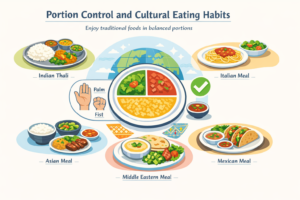
In many cultures, including Indian households, food is associated with love, celebration, and hospitality. Portion control does not mean disrespecting tradition.
It simply means:
-
Enjoying traditional foods in reasonable amounts
-
Balancing heavy meals with lighter ones
-
Being mindful without rejecting cultural practices
This makes portion control adaptable and inclusive.
Common Myths About Portion Control
Myth 1: Portion Control Means Eating Less Always
Truth: It means eating the right amount, not starving.
Myth 2: It Is Only for Weight Loss
Truth: Portion control helps with weight maintenance, digestion, energy, and overall health.
Myth 3: It Is Too Complicated
Truth: Simple visual cues and habits make it easy.
Long-Term Results of Practicing Portion Control
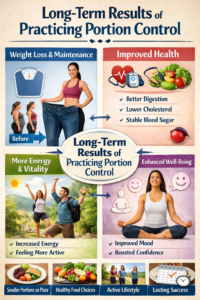
When practiced consistently, portion control leads to:
-
Stable body weight
-
Better digestion
-
Improved energy levels
-
Reduced risk of obesity-related diseases
-
Healthier relationship with food
Unlike short-term diets, the results are lasting.
Conclusion
Portion control is one of the most powerful tools for long-term weight management because it is practical, flexible, and sustainable. It respects the body’s natural signals and supports both physical and mental well-being.
Instead of fighting food or following extreme rules, portion control teaches balance. It allows you to enjoy food, nourish your body, and maintain a healthy weight without stress or guilt.
In the long run, it is not about eating less—it is about eating smart, eating mindfully, and eating for life.