How to Reduce Screen Time and Improve Eye Health
In today’s digital world, screens have become an unavoidable part of our daily lives. From smartphones and laptops to televisions and tablets, we rely on screens for work, education, entertainment, and social connection. While technology has made life easier and more efficient, excessive screen time has also brought new health concerns—especially related to our eyes.
Many people experience eye strain, dryness, headaches, blurred vision, and even sleep problems due to prolonged screen use. Children, adults, office workers, and even elderly people are affected. The good news is that reducing screen time and improving eye health is possible with simple, practical, and consistent habits.
This article explains why too much screen time is harmful, how it affects eye health, and effective ways to reduce screen time naturally, while also sharing eye-care tips that truly work.
Want to know about Natural Ways to Improve Eye Health
Understanding Screen Time and Its Impact
What Is Screen Time?
Screen time refers to the amount of time spent using devices with digital displays, such as:
-
Mobile phones
-
Computers and laptops
-
Tablets and e-readers
-
Televisions
-
Gaming consoles
While moderate screen use is not harmful, excessive and continuous exposure can strain the eyes and affect overall well-being.
Why Too Much Screen Time Is a Problem
Human eyes are not designed to stare at bright screens for long hours. When we look at screens:
-
We blink less than normal
-
Our eyes focus continuously at a fixed distance
-
Blue light from screens enters our eyes
-
Eye muscles remain tense for long periods
Over time, this leads to discomfort and long-term eye issues.
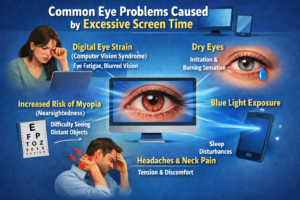
Common Eye Problems Caused by Excessive Screen Time
1. Digital Eye Strain (Computer Vision Syndrome)
Digital eye strain is one of the most common problems caused by prolonged screen use. Symptoms include:
-
Tired or sore eyes
-
Burning or itching sensation
-
Headaches
-
Blurred or double vision
-
Difficulty focusing
This condition affects people of all ages, especially office workers and students.
2. Dry Eyes
When using screens, we blink up to 50% less than normal. Blinking helps spread tears evenly across the eyes. Reduced blinking causes dryness, redness, and irritation.
3. Increased Risk of Myopia (Nearsightedness)
Studies show that excessive screen use, especially in children, increases the risk of myopia. Lack of outdoor activity and continuous near-focus work are major contributors.
4. Blue Light Exposure
Screens emit blue light, which:
-
Causes eye fatigue
-
Disrupts sleep patterns
-
Suppresses melatonin production
-
May increase long-term retinal stress
Excessive blue light exposure at night is particularly harmful.
5. Headaches and Neck Pain
Eye strain often leads to tension headaches. Poor posture while using screens can also cause neck, shoulder, and back pain.
How Much Screen Time Is Too Much?
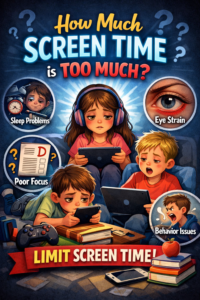
There is no single rule for everyone, but general guidelines include:
-
Adults: Try to limit non-work screen time and take frequent breaks
-
Children (5–17 years): Ideally less than 2 hours of recreational screen time per day
-
Toddlers: Minimal or supervised screen exposure
The key is not just total screen time, but continuous screen use without breaks.
Practical Ways to Reduce Screen Time
Reducing screen time does not mean completely avoiding technology. It means using it mindfully.
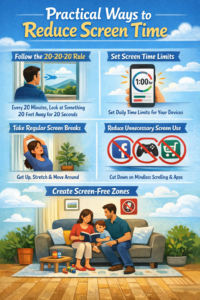
1. Follow the 20-20-20 Rule
This is one of the simplest and most effective eye-care habits.
-
Every 20 minutes
-
Look at something 20 feet away
-
For at least 20 seconds
This relaxes eye muscles and reduces strain.
2. Set Screen Time Limits
Most smartphones and computers offer built-in tools to track and limit screen usage. Use these features to:
-
Monitor daily screen time
-
Set app limits
-
Schedule screen-free hours
Seeing actual usage often motivates better habits.
3. Take Regular Screen Breaks
Instead of long, continuous screen sessions:
-
Stand up every 30–60 minutes
-
Stretch your body
-
Walk for a few minutes
-
Rest your eyes
Even short breaks make a big difference.
4. Reduce Unnecessary Screen Use
Ask yourself:
-
Do I need to check my phone right now?
-
Can this task be done without a screen?
Simple changes include:
-
Reading printed books instead of e-books
-
Listening to music without scrolling
-
Avoiding mindless social media use
5. Create Screen-Free Zones
Designate certain places or times as screen-free, such as:
-
Dining table
-
Bedroom
-
First hour after waking up
-
One hour before sleep
This helps both eye health and mental well-being.
Improving Eye Health Naturally
Reducing screen time alone is not enough. Supporting eye health through lifestyle changes is equally important.
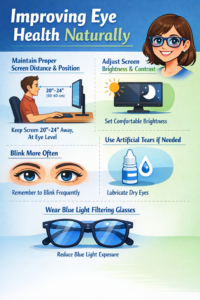
1. Maintain Proper Screen Distance and Position
-
Keep screens at arm’s length
-
Top of the screen should be at or slightly below eye level
-
Avoid glare from windows or lights
Correct positioning reduces eye strain and neck pain.
2. Adjust Screen Brightness and Contrast
Your screen brightness should match your surrounding lighting. Too bright or too dim screens force the eyes to work harder.
-
Use night mode or dark mode when possible
-
Increase text size for comfortable reading
3. Blink More Often
Make a conscious effort to blink, especially during long screen sessions. Blinking keeps eyes moist and prevents dryness.
4. Use Artificial Tears if Needed
If you experience dryness, lubricating eye drops can help. Choose preservative-free drops for regular use and consult an eye doctor if symptoms persist.
5. Wear Blue Light Filtering Glasses
Blue light glasses may help reduce glare and eye fatigue, especially for people who work long hours on computers. While they are not a cure, they can provide comfort.
The Importance of Outdoor Time
Spending time outdoors plays a major role in eye health.
Benefits of Outdoor Activity:
-
Reduces risk of myopia
-
Gives eyes a break from close focus
-
Improves blood circulation
-
Supports mental health
Try to spend at least 30–60 minutes outdoors daily, especially for children.

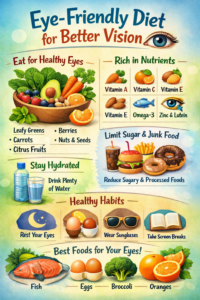
Eye-Friendly Diet for Better Vision
Nutrition plays a crucial role in maintaining healthy eyes.
Foods That Improve Eye Health:
-
Carrots – Rich in beta-carotene
-
Leafy greens – Spinach, kale, fenugreek
-
Fruits – Oranges, berries, mangoes
-
Omega-3 sources – Fish, flaxseeds, walnuts
-
Nuts and seeds – Almonds, sunflower seeds
Drink enough water to keep eyes hydrated.
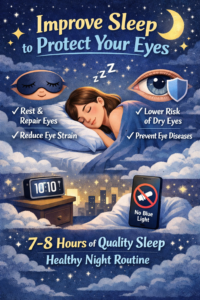
Improve Sleep to Protect Your Eyes
Excessive screen use, especially at night, affects sleep quality.
Tips for Better Sleep:
-
Avoid screens at least 1 hour before bedtime
-
Use warm lighting in the evening
-
Keep phones away from the bed
-
Follow a consistent sleep schedule
Good sleep allows eyes to recover and stay healthy.
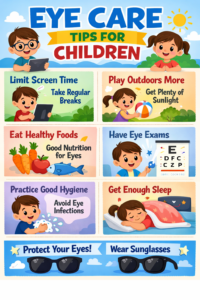
Eye Care Tips for Children
Children are more vulnerable to screen-related eye problems.
What Parents Can Do:
-
Limit screen time strictly
-
Encourage outdoor play
-
Ensure proper lighting while studying
-
Schedule regular eye check-ups
-
Teach healthy screen habits early
Healthy habits formed in childhood last a lifetime.
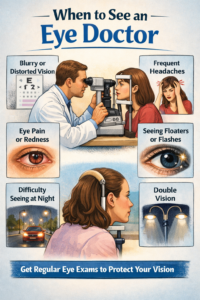
When to See an Eye Doctor
Do not ignore persistent symptoms. Consult an eye specialist if you experience:
-
Continuous eye pain
-
Frequent headaches
-
Blurred vision
-
Redness or irritation
-
Difficulty seeing clearly
Regular eye check-ups help detect problems early.
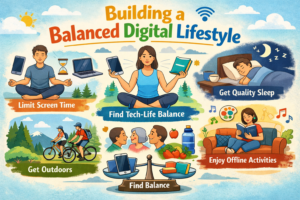
Building a Balanced Digital Lifestyle
Technology is not the enemy—overuse is. A balanced digital lifestyle includes:
-
Mindful screen usage
-
Regular breaks
-
Healthy diet and sleep
-
Physical activity
-
Outdoor exposure
Small daily changes lead to long-term eye health.
Conclusion
Reducing screen time and improving eye health is not about giving up technology, but about using it wisely. In a world dominated by digital screens, protecting our eyes has become more important than ever.
By following simple habits like taking regular breaks, limiting unnecessary screen use, improving posture, eating a nutritious diet, and spending time outdoors, we can significantly reduce eye strain and maintain healthy vision.
Your eyes work hard for you every day. Taking care of them today will protect your vision for years to come.