Why It’s Important to Drink Enough Water for Good Health
Life depends on water. Water is necessary for every cell, tissue, and organ in your body to work properly. But many people don’t realize how important it is to stay hydrated, and they often don’t drink enough water throughout the day. It’s not just about quenching your thirst; staying hydrated is also essential for keeping your body in balance, boosting your energy, and improving your overall well-being.
In this article, we’ll talk about why staying hydrated is so important, how it affects your health, and how you can make better hydration habits a part of your daily life.
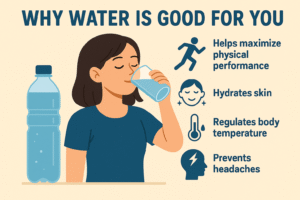
1. Why Water Is Good for You
Water makes up about 60% of your body. This alone shows how important it is for your health and survival. Water helps the body do almost everything, from keeping the temperature stable to delivering nutrients to cells. Even a little bit of dehydration can affect how your body and mind function.
Key Functions of Water in the Body
-
Regulates body temperature: Water is essential for sweating and breathing, which help cool the body.
-
Transports nutrients and oxygen: It moves vital nutrients and oxygen to cells while removing waste products.
-
Aids digestion: Water helps break down food and improves nutrient absorption.
-
Lubricates joints: It keeps joints flexible and reduces stiffness or discomfort.
-
Protects tissues and organs: Water cushions organs and helps them function properly.
Without enough water, your body struggles to perform these essential tasks efficiently.
Want to know about benefits of drinking warm water in the morning
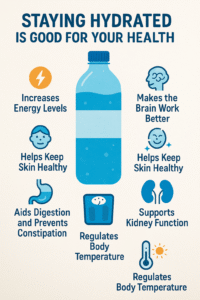
2. Staying Hydrated Is Good for Your Health
Getting enough water brings numerous benefits for both your body and mind. Below are some of the most important ones:
a. Increases Energy Levels
Dehydration can make you feel tired and sluggish. Since water helps move oxygen and nutrients throughout your blood, a lack of it leads to fatigue, headaches, and poor concentration — even with mild dehydration.
b. Makes the Brain Work Better
About 75% of your brain is water. Studies show that dehydration can affect mood, memory, and focus. Drinking enough water keeps you alert, reduces stress, and helps you think more clearly.
c. Helps Keep Skin Healthy
Water is essential for glowing, youthful-looking skin. It flushes out toxins and keeps your skin moisturized from within, reducing dryness, preventing wrinkles, and giving you a natural, healthy glow.
d. Aids Digestion and Prevents Constipation
Water helps dissolve nutrients and keeps waste moving through your digestive system smoothly. Not drinking enough can cause bloating and constipation. Staying hydrated ensures your digestive system works efficiently.
e. Helps Maintain a Healthy Weight
People often confuse thirst with hunger. Drinking water before meals can make you feel full, preventing overeating. Also, replacing sugary drinks like soda or juice with water reduces calorie intake and supports weight management.
Want to know about weight loss tips
f. Supports Kidney Function
Your kidneys play a vital role in filtering waste from your blood. Staying hydrated helps them function properly and prevents kidney stones and urinary tract infections (UTIs).
g. Regulates Body Temperature
When you sweat during exercise or heat exposure, your body loses fluids. Without replenishing them, dehydration can set in quickly. Drinking enough water helps your body maintain a stable internal temperature.
3. Symptoms of Dehydration
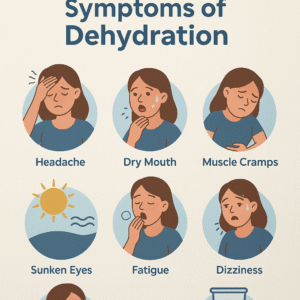
It’s easy to miss the early signs of dehydration, especially when you’re busy or distracted. Watch out for these symptoms:
-
Dry mouth or chapped lips
-
Fatigue or dizziness
-
Dark yellow urine
-
Headaches
-
Dry or flaky skin
-
Muscle cramps
-
Irritability or confusion
If you notice any of these signs, it’s time to drink more water.
4. How Much Water Do You Really Need?
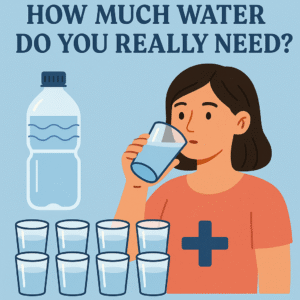
The “8 glasses a day” rule is a good general guideline, but actual needs vary depending on age, weight, activity level, and climate.
Recommended Daily Water Intake
-
Men: About 15 cups (3.7 liters) per day
-
Women: About 11 cups (2.7 liters) per day
Remember that you also get water from foods and beverages like fruits, vegetables, and herbal teas. Watermelon, cucumber, and oranges are excellent water-rich options.
5. Simple Ways to Stay Hydrated All Day
Here are some easy, practical tips to make sure you’re drinking enough water throughout the day:
-
Start your day with water: Drink a glass of water right after waking up to boost your metabolism.
-
Carry a water bottle: Keep one with you everywhere as a reminder to drink regularly.
-
Set reminders: Use phone alarms or hydration apps to track your water intake.
-
Infuse natural flavors: Add lemon, cucumber, mint, or berries to make water more enjoyable.
-
Eat water-rich foods: Include fruits and vegetables like oranges, tomatoes, and lettuce.
-
Drink before meals: A glass of water before eating helps digestion and portion control.
-
Replenish after exercise: Always drink extra water after workouts to replace lost fluids.
6. The Risks of Long-Term Dehydration
Chronic dehydration can lead to serious health issues over time. It can cause urinary tract infections, kidney stones, and even long-term kidney damage. Other effects include high blood pressure, joint pain, and persistent fatigue. Over time, these problems can greatly affect your quality of life.
Final Thoughts
Drinking enough water might seem like a small habit, but it makes a huge difference to your overall health. Water supports nearly every function in your body — from keeping your skin glowing to improving digestion, focus, and energy.
Make hydration a part of your daily routine. Listen to your body’s signals, choose water over sugary or caffeinated drinks, and stay consistent. Your body will reward you with better energy, improved health, and a greater sense of well-being.
1 thought on “Importance of Staying Hydrated for Better Health”